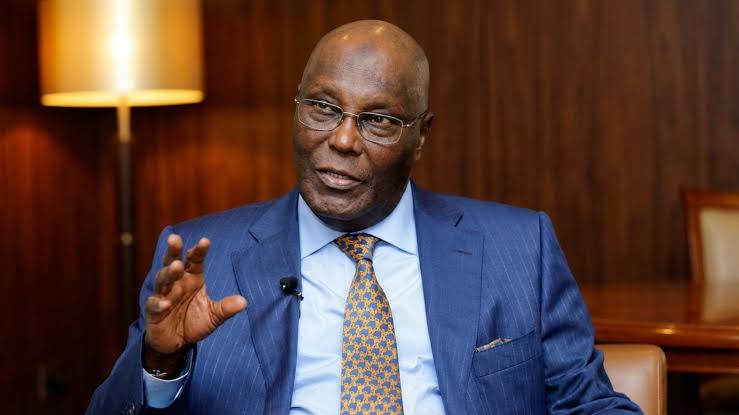
Former Vice President and presidential candidate of the African Democratic Congress (ADC), Atiku Abubakar, has launched a scathing assessment of President Bola Tinubu’s administration, describing its three years in office as a period marked by widespread hardship, insecurity, and economic decline.
Atiku, through a statement issued on Friday by his Senior Special Assistant on Public Communication, Phrank Shaibu, said the true measure of the administration’s performance should not be seen in official celebrations or media campaigns but in the realities confronting ordinary Nigerians.
President Tinubu, who assumed office on May 29, 2023, marks his third anniversary in office today.
According to Atiku, Nigerians are increasingly weary of what he termed “governance through propaganda,” insisting that citizens are already preparing to express their verdict through democratic means.
He argued that contrary to the administration’s promise of renewed hope, Nigerians have instead witnessed rising hardship, insecurity, and deepening poverty.
“As the Tinubu administration marks three years in office, its most fitting report card is not in glossy advertisements or self-congratulatory speeches, but in the tears of hungry families, unemployed youths, struggling businesses, and the images of schoolchildren being abducted,” he stated.
The former Vice President accused the government of failing to address worsening economic conditions, noting that inflation and the cost of living crisis have pushed millions deeper into poverty.
He said food prices have continued to soar beyond the reach of many households, while businesses struggle to survive under mounting economic pressure.
According to him, millions of Nigerians now find it increasingly difficult to afford basic necessities, with inflation eroding purchasing power and discouraging investment.
Atiku further criticised what he described as the administration’s focus on image management rather than practical governance.
“Never in recent history have so many Nigerians worked harder only to become poorer. Never has a government celebrated itself so loudly while citizens suffer so deeply,” he said.
On public borrowing, the former Vice President questioned the utilisation of funds borrowed by the Federal Government, arguing that the increasing debt burden has not translated into visible improvements in citizens’ lives.
He referenced reports suggesting that while trillions of naira had been borrowed within a relatively short period, only a fraction was allocated to capital projects.
Atiku also raised concerns over what he described as perceived preferential allocation of infrastructure projects, citing the Lagos-Calabar Coastal Highway and Badagry-Sokoto Highway as examples.
Addressing insecurity, he pointed to recent cases of schoolchildren abducted in Borno and Oyo states, saying the incidents reflected the administration’s inability to protect citizens.
He described the kidnapping of pupils and teachers as evidence of a growing security crisis and questioned how schools had become targets for criminal groups.
“The tragedies in Borno and Oyo are not isolated incidents. They reflect deeper governance and security failures,” he said.
The former Vice President maintained that government officials have become disconnected from the daily realities facing Nigerians, accusing the administration of downplaying citizens’ suffering.
He argued that while government officials speak of economic improvements, many families continue to skip meals and businesses remain under pressure.
Atiku, however, urged Nigerians to embrace democratic processes, stressing that the ballot box remains the strongest tool for demanding accountability and political change.
He also revealed that the ADC would soon unveil what he described as a comprehensive policy framework aimed at addressing economic challenges, insecurity, governance issues, healthcare, and education.
Promising an issue-based campaign ahead of the next election cycle, Atiku said the party would focus on solutions rather than rhetoric.
He expressed optimism that Nigeria could still recover through accountable leadership, improved security, and policies centred on economic growth and social welfare