By Editor
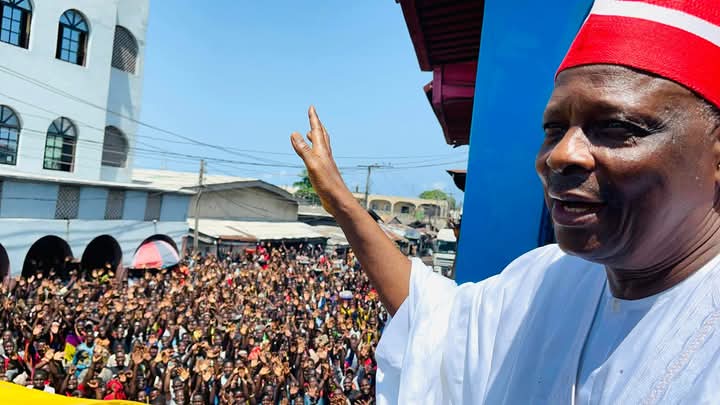
In Nigerian politics, influence is rarely measured only by the offices a leader has held. It is often measured by the number of people whose political journeys began under that leader’s guidance. By that measure, few figures in Northern Nigeria command the kind of legacy associated with Rabiu Musa Kwankwaso. Across Kano and far beyond it, there are individuals who proudly trace their political awakening and growth to the structure he built and sustained over decades. For many of them, Kwankwaso represents mentorship, opportunity, and the courage to enter the often turbulent space of Nigerian politics.
That reputation is not imaginary, and it is not something that should be dismissed lightly. Kwankwaso has undeniably built men.
His political movement has produced administrators, lawmakers, activists, and public figures who continue to influence governance and political discourse in various parts of the country. In a political culture where many leaders build only temporary followerships that collapse once they leave office, the endurance of the structure around Kwankwaso is something even critics cannot easily ignore.
Yet admiration in politics must never grow so large that it becomes immune to reflection. The fact that a leader has built men does not automatically place that leader beyond scrutiny, nor should it silence questions about the direction of his political choices at critical moments in a nation’s history. Democracy survives not on praise alone but on the willingness of citizens and observers to examine the decisions of those who wield influence. Respect and questioning are not enemies; they are companions in any healthy political culture.
Nigeria today stands at a difficult crossroads.
The country faces mounting security concerns, economic pressure that touches nearly every household, and a growing sense among many citizens that the political class has yet to rise fully to the scale of the nation’s challenges. Across different regions, conversations about the future are becoming more urgent. Alliances are being discussed, coalitions are being explored, and many Nigerians are quietly asking whether the current political arrangements are sufficient to respond to the gravity of the moment.
Within this national atmosphere, the role of influential political figures becomes even more significant.
Leaders who command large followings are not merely participants in politics; they are often architects of its direction. This reality is precisely why the actions and decisions of Rabiu Musa Kwankwaso continue to attract attention. When someone has spent years building a movement that commands loyalty and emotional connection among thousands of supporters, every political step he takes naturally invites analysis.
Some people have asked why I appear particularly keen when writing about Kwankwaso. It is a fair question, and it deserves an honest answer. My earlier reflections, including “You Heard World Betrayal Day, Why Is #NorthIsBleeding Not Loud Enough?” and other pieces, were never written out of hostility or personal opposition. They were written from a place of expectation. They were written because leadership that commands influence also carries responsibility, especially in moments when the nation itself seems to be searching for direction.
If a leader could hear the echo of what was once described as “World Betrayal Day,” then surely such a leader also has the ears to hear something even more urgent: the cries of communities that feel abandoned by insecurity, the frustrations of young people facing uncertain futures, and the quiet exhaustion of citizens who simply want a country that works. Nigeria today is not short of voices speaking about these issues. What it often lacks are voices that carry enough weight to shift national conversations and inspire collective action.
Kwankwaso possesses that rare combination of political attributes that make such influence possible. He has the ears of followers who listen when he speaks, the vision that has shaped an enduring political movement, and the voice capable of influencing the direction of political debate in Northern Nigeria and beyond. These qualities explain why discussions about his political positioning continue to surface in public discourse. It is not merely about his past achievements; it is about the role he could still play in shaping the future.
History tends to judge leaders not only by the movements they build but also by the moments when their leadership was most needed. There are times in a nation’s life when politics must rise above familiar boundaries and embrace broader collaboration in the interest of national stability. Such moments often test whether influential figures are prepared to look beyond established structures and consider wider possibilities for national progress.
This is why the conversation around Kwankwaso continues to evolve. It is not driven by hostility, nor by an attempt to diminish the legacy of a leader who has clearly shaped the political journeys of many. Rather, it is driven by a deeper question about the relationship between influence and responsibility. When a nation faces complex challenges, citizens naturally look toward those who possess the ability to inspire change and ask whether that ability will be fully deployed in service of the broader national interest.
Acknowledging that Kwankwaso built men does not end the conversation; it only begins it. Building people is a powerful political legacy, but leadership ultimately extends beyond mentorship. It involves recognising moments when the country requires something more than established loyalties and familiar political arrangements. It requires the courage to listen to the anxieties of the present and to respond in ways that reflect the scale of the challenges before the nation.
Nigeria is a country filled with capable individuals, but it is also a country that often struggles to convert capability into coordinated national progress. The question therefore is not whether Kwankwaso deserves respect. His contributions to political development in Kano and beyond have already secured that.
The deeper question is whether admiration for his achievements should prevent citizens from reflecting on the broader implications of his political choices at a time when Nigeria itself appears to be searching for a new path forward.
A nation in crisis rarely finds solutions through isolated movements alone. History repeatedly shows that periods of national difficulty demand broader unity, deeper listening, and the willingness of influential leaders to engage with evolving political realities. Whether this moment will become one of those turning points in Nigeria’s history remains to be seen.
What is certain, however, is that the country continues to watch the actions of those whose voices carry weight. And in that regard, the conversation about Kwankwaso will likely continue, not because his legacy is in doubt, but because many Nigerians still believe he possesses the ears, the vision, and the voice capable of helping shape a meaningful turn in the nation’s story.
Nworisa Michael is the coordinator of Inter-tribe Community Support Forum and writes from nworisamichael1917@gmail.com