By Editor
There are moments in politics when events begin to align in ways that force reflection not just on what is happening, but on what could have happened if certain decisions were delayed.
In recent days, there have been growing signals around Sen. Rabiu Musa Kwankwaso and possible political realignments involving the African Democratic Congress. While nothing has been formally declared, engagements and quiet consultations like the visit of H.E Peter Obi and others to Sen. Kwankwaso today suggest that the political landscape is already shifting beneath the surface.
But beyond all the speculation, there is a deeper conversation to be had one that speaks directly to Kano and the timing of decisions taken within its political space.
Politics at this level is never really about comfort or loyalty alone; it is about timing, positioning, and the ability to read where the tide is heading before it becomes obvious to everyone. With the internal uncertainties that trailed the NNPP and the steady consolidation of structures within the All Progressives Congress through its congresses, it was only a matter of time before the space began to close up.
And when political space begins to close, options reduce. When options reduce, even the strongest actors are forced into reactive decisions rather than strategic ones.
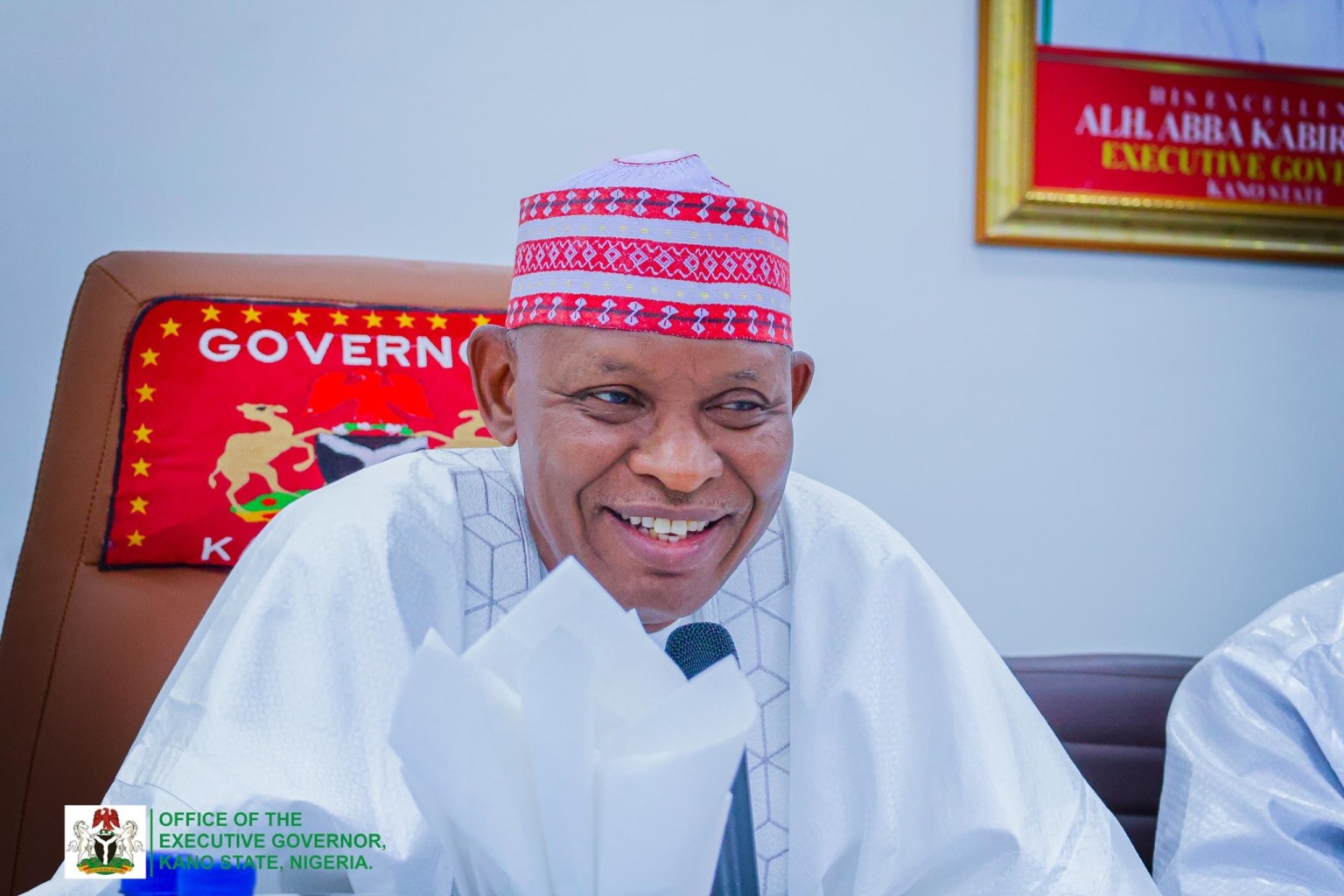
This is where the place of H.E Engr. Abba Kabir Yusuf becomes clearer when viewed without emotion and from the standpoint of political reality. What looked to many like a difficult or even controversial move begins to take the shape of something else entirely a decision taken not in reaction to pressure, but in anticipation of it.
It is also important to acknowledge how that decision was received at the time. For many, it became easy to frame it as betrayal. Supporters were stirred, narratives were shaped, and the governor was, in some quarters, presented as someone who had turned against trust and against the very people who brought him to power. In that moment, his action was not just questioned it was reduced to something anti-people, even anti-Kano.
But time has a way of testing intentions.
What is becoming clearer now is that the decision was never about personal comfort or individual alignment. It was about protecting Kano from political uncertainty. It was about ensuring that the state is not left stranded in moments when national political forces begin to shift and realign.
In fact, the immediate emphasis on the “Kano First” agenda following that move was not accidental. It was a signal a statement that whatever political decisions were being taken, the priority remained the people of Kano and the stability of the state above every other consideration.
Because Kano is not a state that can afford to gamble with uncertainty. Its position in Northern politics, its influence in national outcomes, and its strategic relevance make it too important to be left drifting while others are already repositioning.
What we are beginning to see now, with talks of new alignments and possible shifts, is simply a confirmation that the political terrain was never going to remain the same. The difference, however, lies in timing. While some are only now exploring new paths, others had already made their move when the window was still wide open.
Had such decisions been delayed until now after structures have been firmly set and alignments already taking shape the room for maneuver would have been tighter, the risks higher, and the consequences potentially heavier for governance and stability.
In that sense, what is playing out is not just politics, but the quiet validation of foresight.
Kano, in all of this, stands at the center of a simple but powerful reality: it is too strategic to be left at the mercy of uncertainty.
And sometimes, leadership is not about moving with the crowd it is about moving ahead of it.
Nworisa Michael is the coordinator of Inter-tribe Community Support Forum -ICSF and writes from nworisamichael1917@gmail.com