By Editor
In a country where political disagreements often escalate into institutional crises, Nigeria sometimes overlooks the examples of democratic restraint that already exist within its own borders. One such example lies in Kano State, a state whose political history over the last two decades offers a subtle but powerful lesson in political maturity. It is a lesson that today also finds expression in the philosophy behind the Kano First Agenda.
Kano’s politics has never been gentle. Rivalries in the state are often intense, alliances shift frequently, and electoral contests are fiercely fought. Yet despite this intensity, Kano has largely preserved a culture where political battles return to the ballot box rather than spilling into institutional breakdown. This quiet discipline may be one of the most important democratic traditions Nigeria’s political class has yet to fully study.
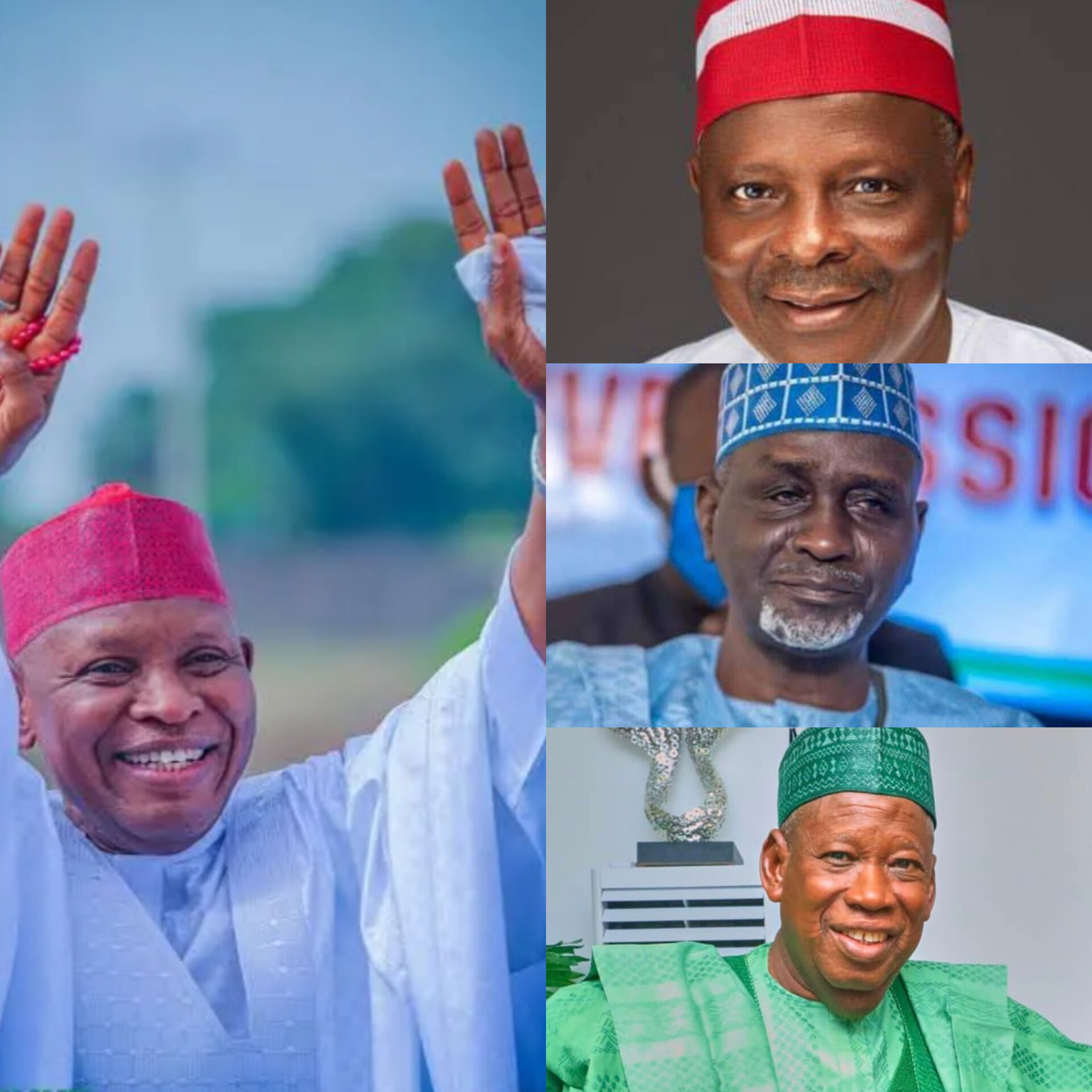
The pattern can be traced through the state’s modern political journey. In 1999, as Nigeria returned to democratic rule, Sen. Rabiu Musa Kwankwaso emerged as governor. Four years later, he lost power to Mallam Ibrahim Shekarau, who would go on to serve two consecutive terms. The rivalry between both men defined Kano politics for years, yet it remained largely anchored within democratic competition. When the political tide turned again in 2011, Kwankwaso returned to office through the electoral process rather than through institutional confrontation.
The cycle of competition continued when Dr. Abdullahi Umar Ganduje succeeded Kwankwaso in 2015. The 2019 governorship election that followed was one of the most dramatic contests in the state’s political history. The race was so closely fought that it was initially declared inconclusive, with the opposition candidate Engr. Abba Kabir Yusuf coming within striking distance of unseating the sitting government despite the advantages of incumbency and the broader perception of federal backing.
Yet even at such a tense moment, Kano’s political contest remained largely within democratic boundaries. The battle did not descend into institutional paralysis or the kind of confrontations that threaten democratic order. Instead, the struggle continued through political mobilisation and electoral persistence. Four years later, the same Abba Kabir Yusuf would eventually defeat the ruling party in the 2023 election, illustrating that political power in Kano can still change hands through the will of voters.
This pattern reveals something deeper about Kano’s political culture. Rivalries are fierce, but political actors tend to recognise that the ultimate referee remains the electorate. Power is contested vigorously, but the arena of contest remains the ballot box.
This tradition becomes even more instructive when viewed alongside political developments in other parts of Nigeria. In Rivers State, for instance, the political conflict between Nyesom Wike and the sitting governor Sir. Siminalayi Fubara has raised concerns about the stability of democratic institutions in the state. When political rivalry moves beyond electoral strategy into institutional confrontation, the result can be legislative crises, governance disruptions and tensions that threaten democratic order.
The contrast with Kano is striking. In Kano, intense political competition has historically been managed through patience, strategy and the expectation that the next electoral cycle will provide the ultimate opportunity to settle political supremacy.
Another lesson from Kano’s experience is the challenge it poses to the long-standing belief in the dominance of “federal might.” Nigerian politics often assumes that parties controlling the federal government possess overwhelming influence over state-level outcomes. Yet Kano has repeatedly demonstrated that determined opposition movements, backed by strong grassroots mobilisation, can overcome incumbency. The eventual victory of Abba Kabir Yusuf in 2023 illustrated that electoral persistence can sometimes triumph over structural advantage.
Even evolving political relationships between mentors and proteges have not destabilised the system. Observers often speculate about the changing dynamics between Sen. Rabiu Musa Kwankwaso and Governor Engr. Abba Kabir Yusuf, yet such developments have not translated into the kind of institutional confrontation that often accompanies political fallouts elsewhere. Disagreements remain largely within the sphere of political maneuvering rather than governmental paralysis.
It is within this broader political tradition that the Kano First Agenda promoted by Governor Abba Kabir Yusuf can also be understood. Beyond being a policy slogan, the idea reflects a deeper philosophy rooted in Kano’s political culture that the interests and stability of the state must ultimately rise above factional rivalries. When political actors accept that governance must continue regardless of political competition, development agendas are able to survive transitions in power.
In many ways, the Kano First philosophy echoes an unwritten rule that has long shaped the state’s politics: political actors may compete vigorously for power, but the stability and progress of Kano must remain a shared responsibility.
None of this suggests that Kano’s politics is perfect. Elections have been contentious, rhetoric has often been sharp, and rival camps remain deeply competitive. Yet the broader pattern reveals a political environment where actors still recognise the discipline of democratic competition.
For Nigeria’s broader political class, this quiet democratic culture offers an important lesson. Democracy is sustained not only by constitutional provisions but also by the habits and expectations of those who participate in it. When political leaders accept that power must ultimately be settled through elections rather than institutional confrontation, democratic stability becomes far more achievable.
Kano’s political journey over the past two decades shows that intense rivalry does not have to destroy democratic institutions. On the contrary, when political competition is anchored in electoral legitimacy and guided by a commitment to the collective interests of the state, it can strengthen democracy itself.
In an era when Nigeria’s democratic system often appears strained by personal rivalries and struggles for supremacy, Kano’s experience offers a reminder: political maturity is not an abstract ideal. It is a practice. And when consistently observed, it can transform fierce political contests into instruments of democratic resilience rather than sources of democratic decline.
Nworisa Michael is the coordinator of Inter-tribe Community Support Forum and writes from nworisamichael1917@gmail.com