Your Excellency,
Permit me to begin by acknowledging a quality in you that even many of your critics readily admit: your remarkable ability to identify, nurture, and build political talents. Across Kano State, many individuals who today occupy positions of influence owe part of their political growth and development to your mentorship, political structure, and confidence in them. For this, you have earned a place in the political history of our state and the respect of many who have followed your journey.
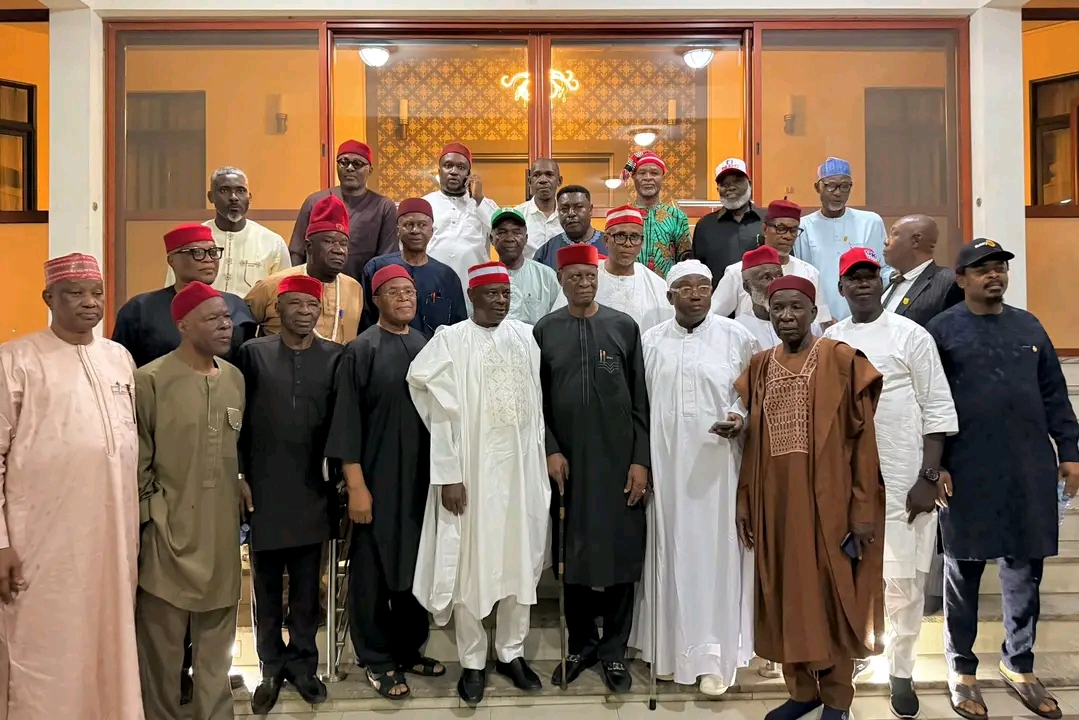
It is therefore with respect that I write this letter following your recent announcement regarding the visit of the Igbo Elders Consultative Forum and their reported endorsement of the Obi/Kwankwaso ticket under the National Democratic Congress.
While I recognize and respect every elder who paid that visit, I must respectfully caution against attaching more political significance to the meeting than it may genuinely represent. As someone who has had the privilege of serving within the Igbo community structure in Kano, first as a representative of His Royal Majesty, Igwe Ikechukwu Akpudo Ezedioramma V, Eze Ndi Igbo Kano, and now as Youth Representative and Assistant Secretary within the Igbo Community Association (ICA), I am familiar with many of the leaders, institutions, and structures that constitute organized Igbo representation in Kano and most northern states.
Let me be clear from the outset. I do not write on behalf of the Igbo Community Association (ICA), Eze Ndi Igbo Kano, nor have I been authorized by its leadership to speak for the organization. The views expressed here are entirely personal. However, I would be failing in my civic responsibility if I did not point out that I could not identify any delegation from the recognized Igbo leadership structures in Kano among those presented as speaking for the wider Igbo community.
The history of organized Igbo community structures in Nigeria can be traced to the historic Igbo unions and the Igbo State Union movement of the 1940s, from which numerous community associations evolved across different parts of the country. In Kano State, the Igbo Community Association (ICA) remains one of the oldest and only established umbrella socio-cultural organizations of Ndigbo.
It is important to note that the institution of the traditional Igbo kingship stool in Kano, the Eze Ndi Igbo Kano is not merely associated with ICA; rather, the kingship institution derives its existence and legitimacy from the constitutional framework of the Igbo Community Association (ICA). The stool was established within the constitutional structure of ICA and remains one of the most visible symbols of organized Igbo leadership in Kano State. This is why the absence of representation from such established structures raises questions when claims are made regarding broad-based Igbo political endorsements across the country.
This is not a criticism of the elders who attended the meeting. Far from it. They deserve respect as fathers and leaders. My point is simply that the attendance of a delegation, however distinguished, should not automatically be interpreted as the collective political position of millions of Igbo people living across Nigeria. Political legitimacy is far broader and more complex than that.
The same principle applies elsewhere. Your Excellency, on the several occasions that His Excellency Peter Obi has visited Kano in pursuit of his presidential ambition, how many times has he formally visited the palace of the Eze Ndi Igbo Kano to engage one of the most visible traditional symbols of the Igbo people in Northern Nigeria? How many times has he sat with the leadership of the organized Igbo community in Kano to seek their views, hear their concerns, or discuss their aspirations?
If tomorrow you travel to Port Harcourt on an important political mission, would it not be considered proper and politically wise to engage the Sarkin Hausawa and other recognized northern community leadership structures there? Such gestures may not determine elections, but they often reveal the depth and sincerity of political outreach.
Political acceptance grows strongest when it is built from the grassroots upward, not merely from conference rooms downward. This is why I respectfully urge you not to be carried away by declarations of endorsements and assurances of electoral support. The true test lies elsewhere.
Take a walk through Sabon Gari, Brigade, Nomansland, Rijiyar Lemo, and other communities across Kano where inter-tribe families have lived, worked, raised their children, and contributed to the development of our state for generations. Speak with traders, transport workers, artisans, market women, young people, professionals, and retirees. Do not ask them what they think of a meeting held in Abuja. Ask them what they genuinely think about the proposed Obi-Kwankwaso political alliance. Ask them whether it reflects their hopes, aspirations, experiences, and expectations for Nigeria’s future.
You may discover that the answers from ordinary people differ considerably from the declarations made in meeting halls. You may also discover that many opinions have been shaped not by recent political calculations but by years of lived experiences, observations, and perceptions. For many within Kano’s inter-tribe communities, political acceptance is not built merely on slogans, alliances, or endorsements. It is built on trust, inclusion, and the feeling that one belongs.
These realities cannot be measured by endorsements alone.
After all, charity begins at home. And in politics, genuine public acceptance cannot be substituted by endorsements, however impressive they may appear.
Yours in Nation Building,
Nworisa Michael
Coordinator, Inter-tribe Community Support Forum,
Kano State.
Nworisamichael1917@gmail.com