By Editor
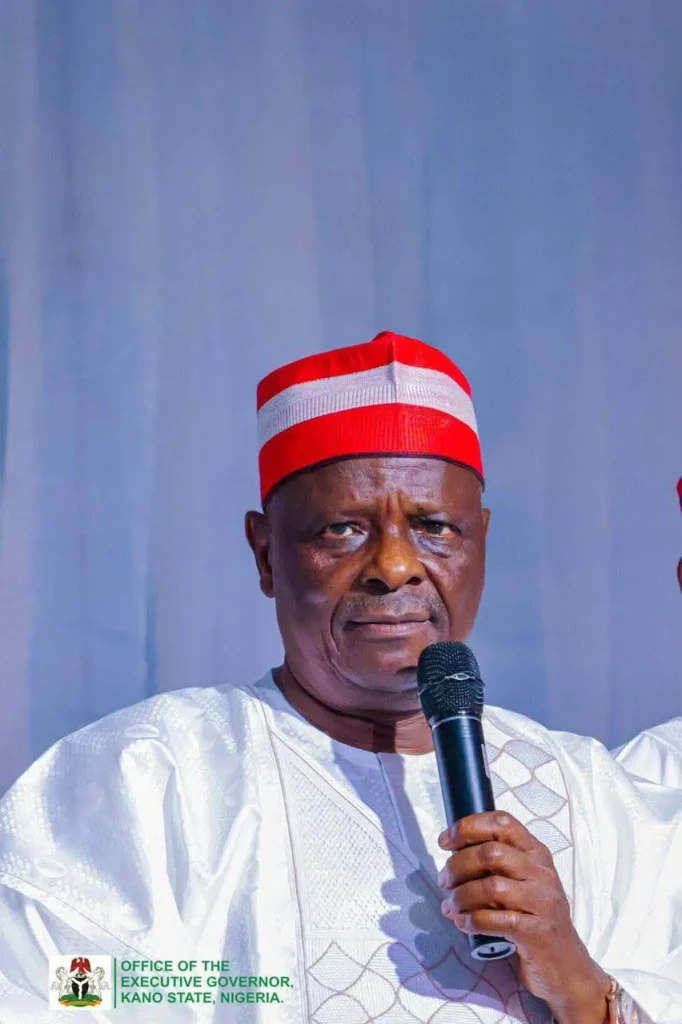
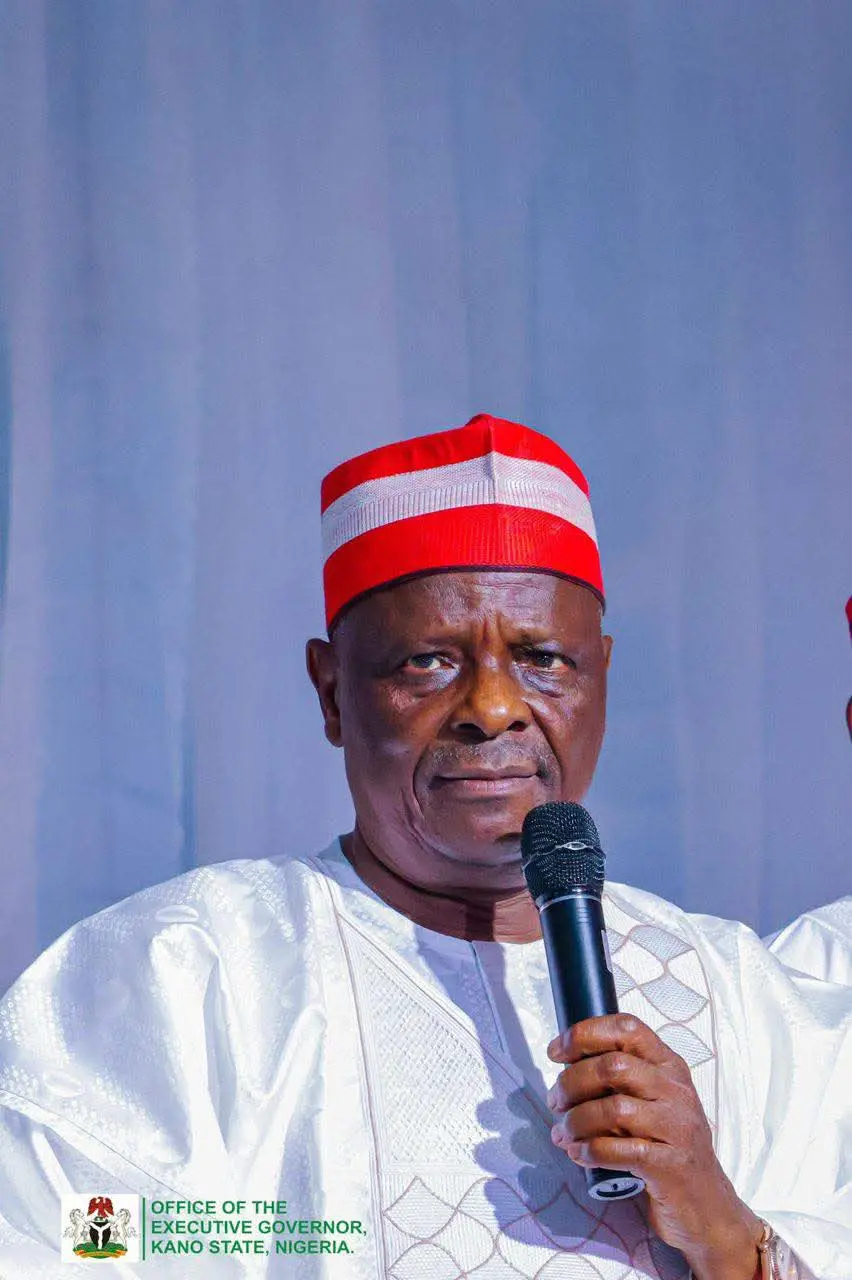
In the long and richly documented history of Nigerian political rhetoric, few phrases have been deployed with greater frequency, greater passion, or greater ultimate hollowness than the declaration of love for the common people. Every Nigerian politician, from the most transparently self-serving to the most genuinely committed, has at some point stood before a crowd, looked into the eyes of men and women whose lives bore the full weight of governance failure, and proclaimed an undying devotion to their welfare. What separates the merely ambitious from the deliberately deceptive is not the sincerity with which the declaration is made in the moment of its making. It is the consistency, or the catastrophic absence of consistency, between what is promised and what is delivered, between the narrative that is constructed for public consumption and the reality that quietly unfolds behind it. By this standard, the political career of Senator Rabiu Musa Kwankwaso stands as one of the most instructive case studies in deliberate political deception that Northern Nigeria has produced in the democratic era.
Let us be precise about what we mean by deliberate deception, because precision is the enemy of propaganda and the foundation of honest political analysis. We are not suggesting that Kwankwaso has never meant what he said. We are not arguing that his affection for Kano is entirely manufactured or that every promise he ever made was spoken in conscious bad faith. What the record shows, and it is a record accumulated across twenty-six years of public life and therefore impossible to dismiss as selective or circumstantial, is a consistent and recurring pattern in which Kwankwaso’s public commitments to Kano’s interests have been systematically subordinated, at every critical moment of decision, to his private calculations of personal political advantage. That pattern, sustained across a generation and repeated with a regularity that rules out coincidence, is the definition of deliberate deception. It is politics conducted as performance, governance offered as theatre, and loyalty demanded from others by a man who has never once demonstrated it himself when the cost of doing so was genuinely high.
The first and most foundational deception in Kwankwaso’s political career is the deception of developmental vision. From his earliest days as governor in 1999, he presented himself to Kano and to Nigeria as a builder, a man of practical action whose commitment to development was written in concrete and asphalt rather than in the empty language of political manifestos. And it is true, as it has always been true and as this analysis has never denied, that he built things. Roads were constructed. Buildings were commissioned. Scholarships were awarded. But the deception lay not in the absence of activity. It lay in the deliberate conflation of activity with transformation, in the careful cultivation of a narrative that equated visible, photographable, ribbon-cuttable projects with the deeper, less glamorous, considerably more difficult work of structural economic development that Kano actually needed. While the cameras captured the road inaugurations, the state’s industrial base continued its long collapse. While the scholarship ceremonies generated applause, the economy that scholarship graduates would need to enter upon their return remained unreformed, undiversified, and structurally incapable of absorbing the educated youth that his program was producing. The vision that was sold to Kano and the vision that was actually being pursued were never quite the same thing, and that gap, maintained with considerable political skill across two full terms of government, is a deception of the first order.
The second great deception is the deception of movement. Kwankwasiyya, as a political phenomenon, was presented to its members and to the wider public as a people’s movement, a grassroots expression of Kano’s collective political will, a democratic force that existed to give voice and power to the ordinary men and women of the state. The red cap was its symbol, and that symbol was deliberately chosen and carefully cultivated to evoke belonging, solidarity, and shared identity. Young men wore it with pride. Communities organized around it. Families identified with it. And in the emotional reality of those who participated in it, the movement was genuine, the belonging was real, and the identity it conferred was meaningful. But the deception lay in the vast distance between what the movement felt like from the inside and what it actually was from a structural and functional standpoint. Kwankwasiyya was never a democratic movement in any meaningful sense. It had no internal elections of substance, no genuine policy deliberation, no mechanisms by which ordinary members could meaningfully influence its direction. It was, in its essential architecture, a personal political vehicle dressed in the language and symbols of collective identity. Its members were not participants in a movement. They were assets in a political portfolio, and the distinction matters enormously when you are trying to understand the scale of the deception that was visited upon them.
The third and perhaps most consequential deception is the deception of loyalty. No theme has been more central to Kwankwaso’s political brand than loyalty, the fierce, unconditional, almost sacred loyalty that Kwankwasiyya demands from its members and that Kwankwaso himself has presented as the movement’s defining moral virtue. He has spoken of loyalty with the passion of a man to whom it is genuinely sacred. He has rewarded it extravagantly when it served him and punished its absence with a severity that left no ambiguity about the seriousness with which he regarded the obligation. And yet, the record of his own conduct toward those to whom he owed loyalty is a record of serial abandonment that makes his demands upon others not merely hypocritical but breathtakingly so. He abandoned the PDP and its thousands of loyal Kano members when the party ceased to serve his ambitions. He abandoned the APC and its Kano structures when that party refused to accommodate his presidential aspirations. He abandoned, in the most personal and politically devastating sense, every political associate he ever elevated to a position of significance, from Abdullahi Ganduje to Abba Kabir Yusuf, the moment those associates demonstrated an independence of mind that his model of political relationships could not accommodate. A man who has broken faith with three political parties, two governors he personally produced, and an uncountable number of individual loyalists whose careers he disrupted in his many migrations cannot credibly present himself as the guardian of political loyalty. That he has done so, with apparent sincerity and considerable public effect, is testimony to the extraordinary sophistication of the deception he has maintained.
The fourth deception is the deception of Northern interest. In every presidential campaign he has mounted, and he has mounted three of them across two decades, Kwankwaso has presented himself as a champion of Northern Nigeria’s collective political interests, a man whose candidacy represented not personal ambition but regional necessity. The framing was always compelling and was always, at its most superficial level, plausible. Kwankwaso is intelligent, experienced, organizationally formidable, and capable of articulating Northern Nigeria’s legitimate grievances with considerable force and clarity. But the deception lay in the gap between the regional framing and the personal reality. A genuine champion of Northern collective interests would have weighed the cost of dividing the Northern vote against the probability of personal success and made the statesman’s calculation. Kwankwaso made the ambitious man’s calculation instead, running each time in a manner that maximized his personal visibility while minimizing the North’s collective political leverage. The 2023 presidential election, in which his candidacy contributed to a fragmentation of Northern political influence at a moment of genuine national consequence, is the most recent and most costly example of this particular deception. The North was told it was being championed. It was, in practice, being used.
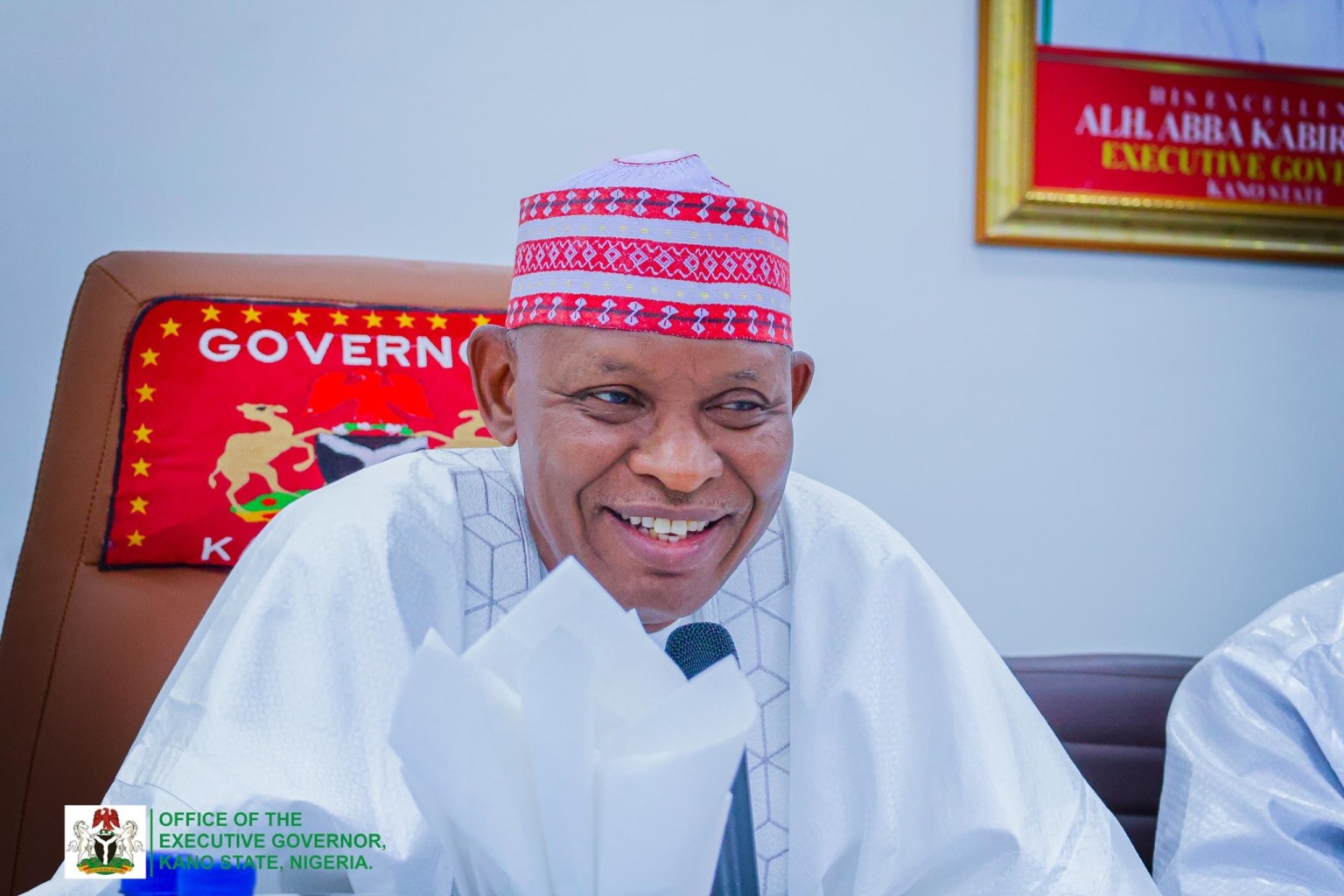
The fifth deception, and the one that is most urgently relevant to Kano’s present political moment, is the deception of opposition. Since Governor Abba Kabir Yusuf made the strategic and entirely defensible decision to align his administration with the federal government, Kwankwaso and his movement have prosecuted a narrative of principled opposition, presenting their resistance to the governor’s political realignment as a matter of democratic principle, movement integrity, and concern for Kano’s political identity. It is a narrative constructed with the skill of a communications operation that has had decades of practice in the art of making personal grievance sound like public service. But the deception is visible to anyone willing to look at it clearly.
Kwankwaso’s opposition to Governor Abba is not principled. It is personal. It is not about Kano’s democratic health. It is about a godfather’s wounded pride and a political investor’s fury at discovering that his investment has developed an independent mind. A man of genuine principle who disagreed with his former protege’s political decision would articulate that disagreement in the language of policy and governance, offering Kano an alternative developmental vision. Kwankwaso has offered no such vision. He has offered grievance, narrative, and the considerable organizational energy of a movement deployed not in service of Kano’s future but in service of his own unresolved political ambitions.
There is, in all of this, a profound and painful irony. Kwankwaso is not a man of small abilities. He possesses genuine organizational genius, real political intelligence, and an understanding of Northern Nigerian society that is both deep and nuanced. Had these considerable gifts been placed consistently and selflessly in service of Kano’s actual development needs, the state’s trajectory over the past quarter century might look substantially different. The roads he built might have been accompanied by the industries that would have given the people who used them economic reasons to stay. The scholars he educated might have returned to a transformed economy rather than a stagnant one. The movement he built might have been a genuine force for democratic accountability rather than a vehicle for personal advancement dressed in the language of collective identity. The tragedy of Kwankwaso is not that he lacked the capacity to serve Kano genuinely. It is that he consistently chose not to, and then constructed, with considerable skill and evident satisfaction, a public narrative that made that choice invisible.
Governor Abba Kabir Yusuf has been called a betrayer by the movement that produced him. But the evidence of this analysis points, with the clarity of a record accumulated across twenty-six years and examined without fear or favor, toward a different and considerably more important conclusion. The betrayer in Kano’s recent political history is not the governor who chose his people’s development over his godfather’s control. It is the senator who chose his presidential ambitions over his people’s development, his personal loyalty demands over democratic principle, his movement’s organizational energy over genuine governance, and his wounded pride over Kano’s peace and stability. That is the record. It speaks for itself. And it will continue to speak, with increasing volume and increasing clarity, as Kano’s people complete the accounting that three decades of deliberate political deception have made both necessary and, at long last, unavoidable.