President Bola Ahmed Tinubu has said Nigeria’s old, colonial-era tax laws contributed to widespread poverty due to their fragmented and inconsistent nature, assuring that ongoing reforms will create new economic opportunities and promote inclusive growth.
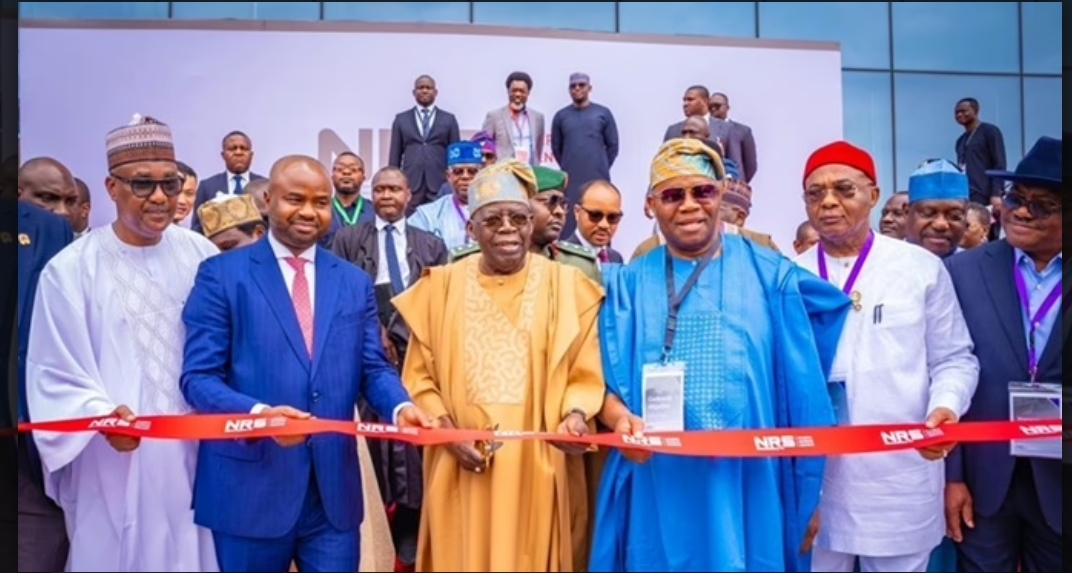
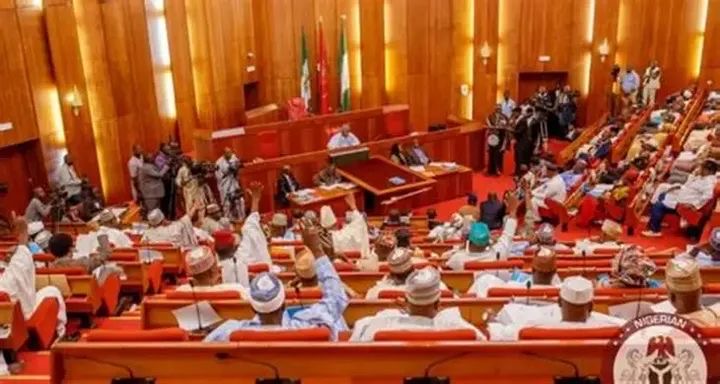
The President made the remarks on Tuesday in Abuja during the commissioning of the 16-storey headquarters of the Nigeria Revenue Service (NRS). The event was attended by top government officials, including Senate President Godswill Akpabio and Speaker of the House of Representatives Tajudeen Abbas, as well as ministers, lawmakers, private sector leaders, and several state governors.
According to a statement issued by his Special Adviser on Information and Strategy, Bayo Onanuga, the President said the new tax system, which took effect in January, is designed to eliminate outdated structures, improve efficiency, and position Nigeria for global competitiveness.
Reflecting on his inauguration, Tinubu reiterated his commitment to economic reform.
“On my inauguration day, I made a solemn pledge that we will move Nigerians from the dimness of uncertainty into the clear light of renewed hope,” he said.
“I committed to confronting structural weaknesses, restoring financial stability, and building an economy anchored in discipline, equity, and opportunity. Today, I stand before you to reaffirm that these words were not rhetoric; they were a covenant with the Nigerian people.”
He described the commissioning of the NRS headquarters as more than the unveiling of a building, noting that it represents a broader effort to strengthen Nigeria’s fiscal system and rebuild trust in public institutions.
“No serious nation can achieve lasting prosperity on a weak and fragmented revenue system,” the President stated. “No government can demand trust from its citizens when taxation is opaque, inefficient, or unjust.”
Tinubu commended the Executive Chairman of the NRS, Zacch Adedeji, for completing the project within 30 months, decades after its foundation was first laid. The facility is expected to accommodate about 3,000 staff and includes a data processing centre, clinic, auditorium, training facilities, gym, and library.
He also acknowledged the role of the Minister of State for Finance, Taiwo Oyedele, in leading efforts to modernise Nigeria’s tax laws into a more coherent and accessible framework.
Addressing public concerns, the President assured that the reforms are designed to simplify the tax system, eliminate distortions, and create a fair and transparent environment that supports investment and economic growth.
“Our direction is clear: to have a revenue system that rewards enterprise, supports growth, and ensures that every contribution to the national cause is matched by feasible value for the people,” he said.
Tinubu added that early outcomes of the reforms have been encouraging, citing improved fiscal stability, stronger foreign reserves, a more efficient trade environment, and growing investor confidence.
“These gains are not incidental. They are the result of deliberate policy, sustained effort, and a commitment to doing what is right for the long-term prosperity of our nation,” he noted.
He urged the leadership of the NRS to uphold high standards of transparency, fairness, and accountability, stressing that the agency must not only collect revenue but also build trust and demonstrate responsible governance.
“It must become a model institution that earns confidence at home and respect abroad,” he said.
In his remarks, Akpabio called on Nigerians to be patient with the administration, arguing that the reforms are already yielding results. He pointed to the disappearance of long fuel queues as evidence of progress, noting that the country has moved from scarcity to improved availability.
Similarly, Abbas said the reforms have addressed longstanding structural weaknesses in Nigeria’s revenue system, which had previously been characterised by overlapping mandates and fragmented legal frameworks.
He noted that the current approach aligns institutions, rules, and incentives into a more coherent system, improving efficiency and public confidence.
In his welcome address, Adedeji described the commissioning as a milestone in the agency’s institutional development, noting that the administration inherited an economy facing fiscal constraints, low investor confidence, and structural inefficiencies.
He said the reforms introduced under Tinubu’s leadership have significantly improved revenue generation and fiscal governance.
“To put this in perspective, the first tax laws in this country were enacted in 1903. We have now streamlined over 60 fragmented tax laws into a simplified and more coherent framework,” he said.
Adedeji disclosed that Nigeria’s revenue collection grew from N6.8 trillion five years ago to N28.7 trillion in 2025, attributing the increase to improved systems and broader coverage rather than higher tax burdens.
He added that funds available to the federation rose from N711 billion in May 2023 to N3.6 trillion by September 2025, reflecting stronger fiscal management.
He also highlighted the launch of the National Single Window in collaboration with the Nigeria Customs Service, describing it as a major step in modernising trade processes, reducing inefficiencies, and boosting revenue.
The Managing Director of the China Civil Engineering and Construction Company (CECC), Guan Shuai, whose firm handled the project, commended the President’s leadership, noting that his policies have positioned Nigeria to attract foreign investment and drive long-term economic growth.