
By Editor
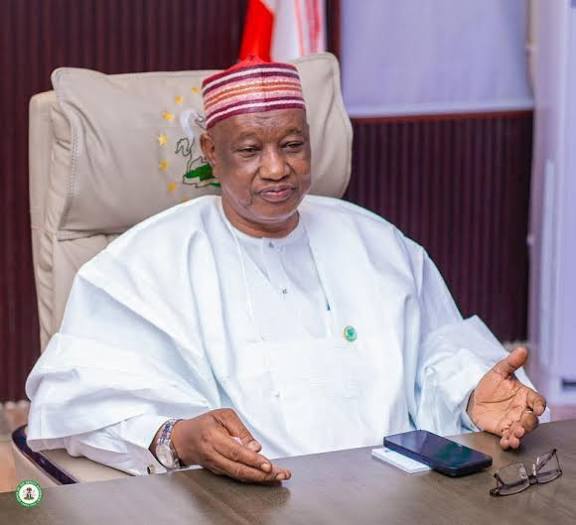
The decision by the Kano State House of Assembly to commence impeachment proceedings against the Deputy Governor of Kano State, Aminu Abdussalam Gwarzo, marks a significant moment in the democratic and accountability process within the state. While such developments often generate political tension and public debate, they must be examined through the lens of constitutional responsibility, transparency, and the rule of law.
Under the provisions of Constitution of the Federal Republic of Nigeria 1999, particularly Section 188, the legislature is empowered to initiate impeachment proceedings against a governor or deputy governor when credible allegations of gross misconduct arise. This constitutional mechanism is not designed as a political weapon but as an institutional safeguard meant to protect public trust and ensure that public office holders remain accountable to the people they serve.
Reports indicate that at least thirty-eight lawmakers of the Kano State House of Assembly signed the notice of impeachment presented during plenary. Such a number reflects a strong legislative consensus, suggesting that the concerns raised by the lawmakers are considered serious enough to warrant formal investigation and constitutional scrutiny.
The allegations against the deputy governor are grave. According to the notice presented before the Assembly, he allegedly received kickbacks from the forty-four local government councils in Kano State during his tenure as Commissioner for Local Government and later as Deputy Governor. Lawmakers claim that between June 2023 and January 2024, about ₦1.5 million was allegedly collected monthly from each council, amounting to approximately ₦66 million every month and a total of about ₦462 million within seven months.
Furthermore, the Assembly alleged that between February and July 2024, additional payments totaling about ₦726 million were received under the claim of executing special assignments on behalf of the councils. If proven true, such actions would represent a serious violation of the principles of transparency and financial accountability expected from public officials.
Another major allegation concerns the reported facilitation of the release of about ₦440 million from the local government councils to Novomed Pharmaceuticals Limited. Lawmakers argue that the transaction violated established procurement and fiscal management procedures of the state. Issues related to procurement processes are particularly sensitive in public administration because they directly involve the management of public funds meant for development and service delivery.
It is important to emphasize that impeachment proceedings are not equivalent to a conviction. Rather, they represent the beginning of a constitutional process designed to establish the facts through investigation and due process. The accused public officer must be given the opportunity to defend himself before any final decision is reached.
Democracy thrives when institutions function independently and responsibly. The legislature must be courageous enough to exercise oversight, the executive must remain transparent in governance, and the judiciary must be prepared to interpret the law where necessary. These three arms of government must work in balance to maintain public confidence in the democratic system.
For the people of Kano State, this development should not simply be viewed through the narrow lens of political rivalry. Instead, it should be seen as a reminder that leadership comes with immense responsibility and that public office is a trust bestowed by the citizens.
As the process unfolds, it is crucial that all parties involved conduct themselves with maturity, respect for the law, and commitment to the democratic cprinciples enshrined in the Constitution. Ultimately, the outcome must be guided not by sentiment or political interests, but by facts, justice, and the broader interest of Kano State.
In a democracy, accountability is not optional it is essential. When institutions act within the law to address allegations of misconduct, it reinforces the principle that no public office holder is above the law.
The eyes of the public are now on the constitutional process, and whatever the final outcome, it should strengthen not weaken the democratic institutions of Kano State and Nigeria as a whole.
Written by: Comrade Najeeb Nasir Ibrahim