
By Nworisa Michael
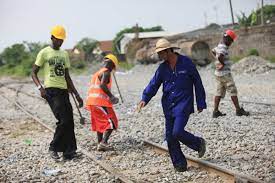
Nigeria’s growing dependence on foreign skilled labour has again come under scrutiny, as the Rector of the Federal Polytechnic, Damaturu, Dr. Ibrahim Bello Bashir, raised concerns over the absence of certification for local artisans across Northern Nigeria.
Speaking at an event marking his first year in office, Dr. Bashir warned that the lack of structured certification and skills validation is sidelining thousands of capable Nigerians, even as major national projects continue to rely heavily on expatriate workers.
According to him, large-scale developments such as the Dangote Refinery and the Ajaokuta–Kaduna–Kano (AKK) Gas Pipeline have largely excluded local artisans, not because of a lack of manpower, but due to the absence of recognised certification.
“Nigeria has the skills, but not the certification framework to prove it,” he said, noting that welders, electricians, and pipe fitters are routinely imported while local workers remain unemployed.
Dr. Bashir further projected that upcoming projects, including the Mambila Hydroelectric Power Project and the proposed Trans-Saharan Gas Pipeline, could require over 115,000 certified artisans, a demand the country is currently ill-prepared to meet.
To address this gap, he disclosed that the Federal Polytechnic, Damaturu, has begun implementing reforms aimed at expanding access to skills training and certification. These include integrating Almajirai into formal vocational programmes, introducing Recognition of Prior Learning (RPL) for Islamic scholars, and making skills certification mandatory for all graduating students.
He also revealed plans to establish new departments focused on hospitality and service-related trades to align training with market demand.
Beyond skills development, the rector noted that his advocacy for transparency in tertiary institutions has influenced federal policy, while ongoing infrastructure upgrades supported by TETFund have improved campus security despite funding delays.
Dr. Bashir said the institution is positioning itself for measurable impact within the next five years, urging policymakers and stakeholders to prioritize skills certification as a pathway to job creation, local empowerment, and industrial competitiveness.
“Without certified skills, Nigeria will continue to watch opportunities pass its citizens by,” he warned.