By Nworisa Michael
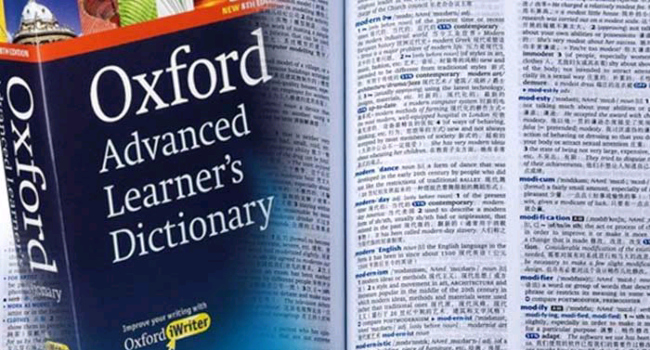
The Oxford English Dictionary (OED) has expanded its glossary to include several Nigerian-origin words, further cementing the growing global influence of Nigerian language, culture and everyday expressions.
The additions form part of the OED’s December 2025 update, released in early January 2026, which introduced over 500 new words, phrases and revised entries drawn from different varieties of English around the world, including West African English.
Among the Nigerian expressions now officially recognised are “abeg,” “mammy market,” “amala,” “moi moi,” “biko,” “nyash,” “Ghana Must Go,” and “Afrobeats.” The update reflects the widespread usage of these words beyond Nigeria, particularly in global media, music, cuisine and digital communication.
The dictionary defines “abeg” as an interjection used to convey a range of emotions such as appeal, surprise, frustration or disbelief, while “biko,” originally from the Igbo language, is described as an adverb and interjection meaning “please,” often used to add emphasis or urgency. “Nyash” is defined as a colloquial reference to a person’s buttocks, while “mammy market” is recognised as a market traditionally run by women, commonly found in military barracks, youth service camps and educational institutions.
In the category of food, “amala” is described as a dough-like staple made from yam, cassava or plantain flour, while “moi moi” is defined as a steamed bean pudding originating from the Yoruba people. The term “Ghana Must Go,” widely associated with the large chequered plastic travel bags used across West Africa, is traced to the 1983 expulsion of undocumented Ghanaian migrants from Nigeria.
The update also retained “Afrobeats” as a recognised musical genre, describing it as a popular style that blends West African rhythms with elements of jazz, soul and funk.
Oxford editors noted that the inclusion of these words reflects the increasing global visibility of Nigerian English, Pidgin and street expressions, driven by migration, pop culture, music, food and online conversations.
This latest update builds on earlier expansions of the dictionary, including a January 2025 update that added Nigerian expressions such as “japa,” “agbero,” “eba,” “abi” and “419,” further highlighting Nigeria’s linguistic footprint on global English usage.