
By Nworisa Michael
A wave of public criticism has followed a recent statement issued by the Economic and Financial Crimes Commission (EFCC), as Nigerians took to social media to question the agency’s consistency and independence in the prosecution of corruption cases.
The backlash erupted after the EFCC, in a post shared on its official Facebook page on Thursday, dismissed allegations made by Bauchi State Governor, Bala Mohammed, who accused the anti-graft agency of being influenced by political opponents in its investigations involving his administration.
In the statement, the EFCC described the allegations as “wild and far-fetched,” insisting that it is an independent and non-partisan institution carrying out its constitutional mandate without external interference. The Commission further maintained that no political office holder, regardless of status, has the authority to influence its investigative activities.
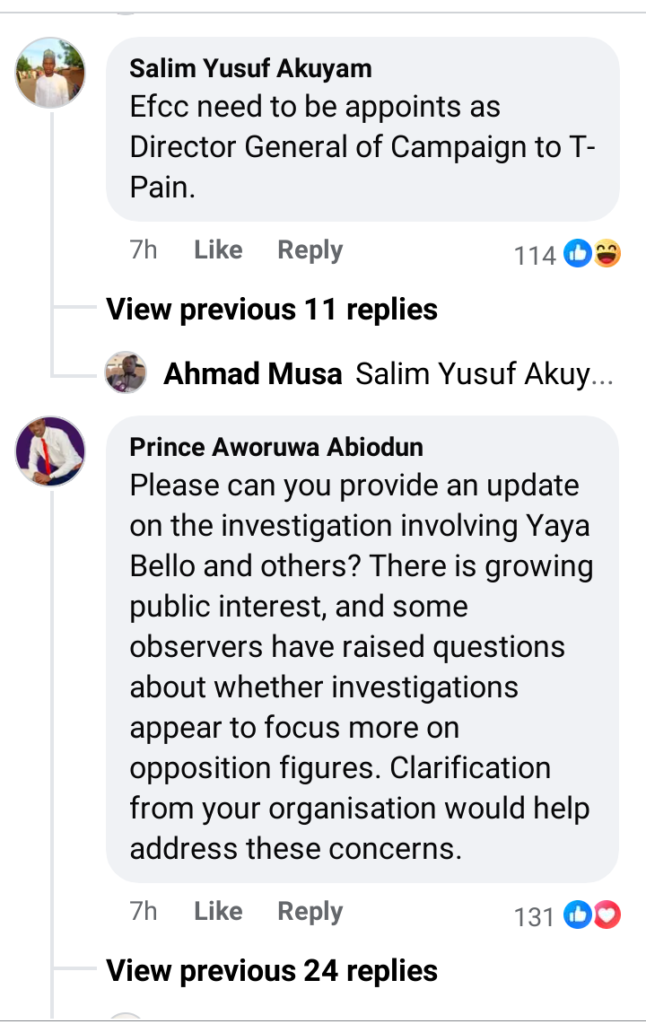
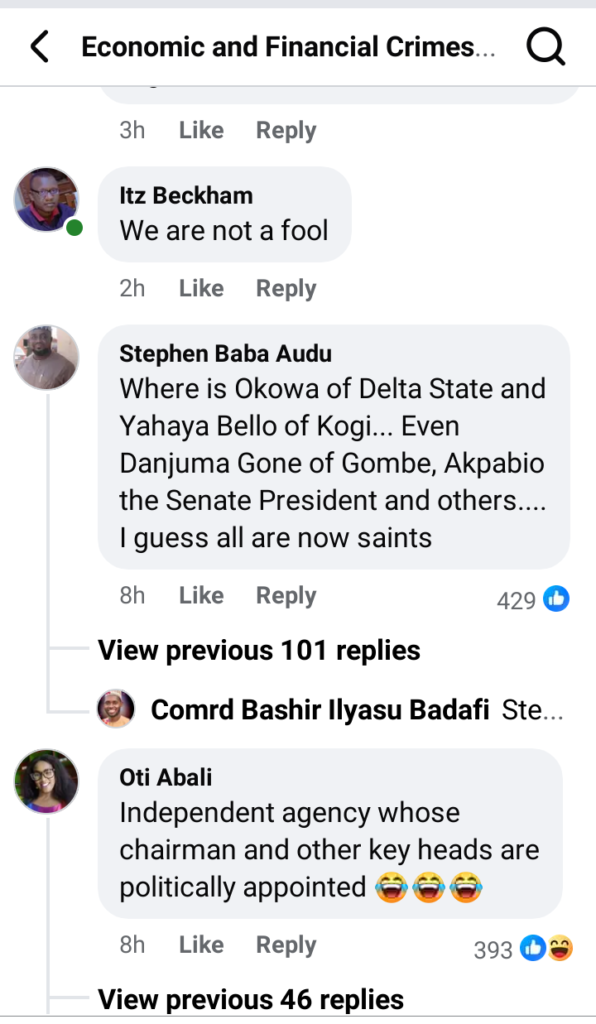
However, the response from Nigerians in the comment section was swift and critical. Many users accused the EFCC of selective enforcement, alleging that corruption cases involving opposition figures often receive aggressive attention, while investigations linked to politically influential individuals or members of the ruling party appear to stall or fade from public view.
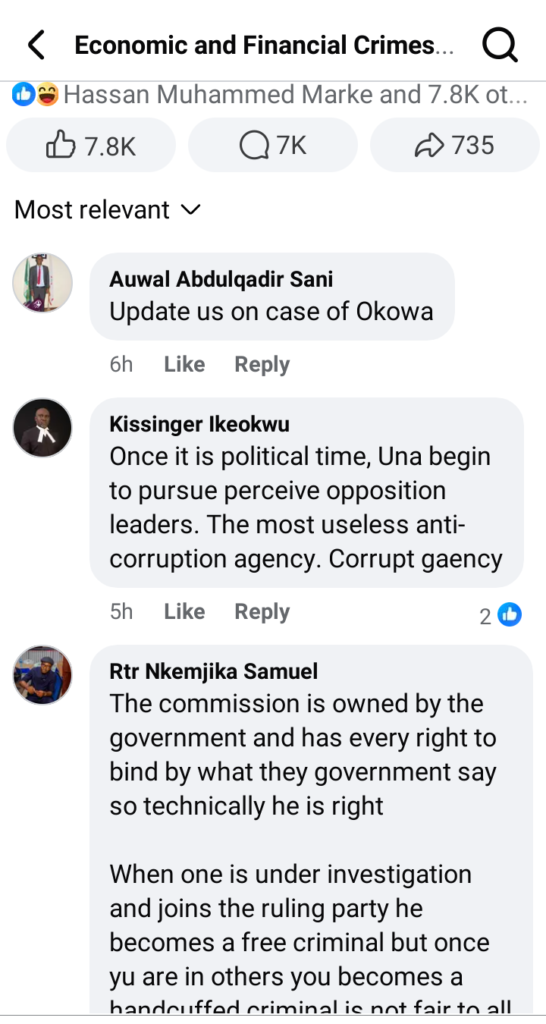
Several commenters specifically called on the EFCC to provide updates on high-profile cases previously announced by the Commission, including investigations involving former Kogi State Governor, Yahaya Bello, and other politically exposed persons. They argued that sustained silence on such cases has contributed to public scepticism about the agency’s impartiality.
The backlash also reignited broader debates about the independence of anti-corruption institutions under the administration of President Bola Ahmed Tinubu, with critics stressing that transparency, timely prosecution, and regular public briefings are necessary to rebuild confidence in the fight against corruption.
While acknowledging the EFCC’s repeated assurances of neutrality, some Nigerians insisted that public trust can only be strengthened through consistent action across political lines and clear communication on the status of ongoing and concluded investigations.
As of the time of filing this report, the EFCC had not issued any additional response addressing the specific demands raised by members of the public in the wake of the online backlash.