By Nworisa Michael
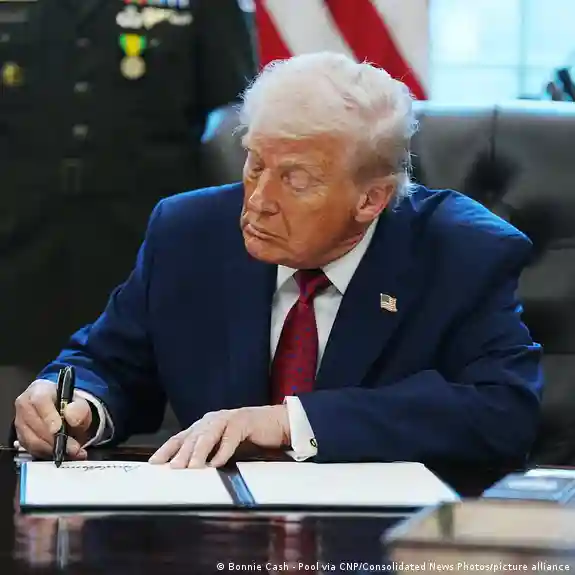
The United States has expanded its travel restrictions, placing Nigeria among 15 additional countries facing partial entry limitations under a new presidential proclamation signed by President Donald Trump on December 16.
The new measures, which will take effect from January 1, 2026, are aimed at addressing what the White House described as deficiencies in screening and vetting processes, identity management, information sharing and high visa overstay rates in several affected countries.
Under the partial restrictions, entry into the United States will be suspended for immigrants and certain categories of non-immigrant visa holders. These include B-1 and B-2 visas for business and tourism, F and M visas for students and vocational trainees, as well as J visas for exchange visitors. However, exemptions may apply to lawful permanent residents, individuals holding valid visas issued before the effective date and cases considered to be in the national interest of the United States.
Nigeria was listed alongside Angola, Antigua and Barbuda, Benin, Côte d’Ivoire, Dominica, Gabon, The Gambia, Malawi, Mauritania, Senegal, Tanzania, Tonga, Zambia and Zimbabwe. These countries now join others already under partial restrictions, including Burundi, Cuba, Togo, Turkmenistan and Venezuela, with some modifications applied.
Explaining Nigeria’s inclusion, the White House cited persistent security challenges, noting that extremist groups such as Boko Haram and the Islamic State continue to operate in parts of the country, complicating effective screening and vetting processes. U.S. authorities also raised concerns over visa compliance by Nigerian nationals.

Data from the U.S. Department of Homeland Security’s Fiscal Year 2024 Entry and Exit Overstay Report showed that Nigeria recorded a B-1 and B-2 visa overstay rate of 5.56 percent, while overstay rates for F, M and J visas stood at 11.90 percent.
In addition to the partial restrictions, the proclamation announced full entry suspensions for nationals of Burkina Faso, Mali, Niger, South Sudan and Syria, as well as individuals holding travel documents issued by the Palestinian Authority. Laos and Sierra Leone, which were previously under partial restrictions, have now been elevated to full suspensions. Existing full restrictions remain in place for countries including Afghanistan, Myanmar, Chad, the Republic of the Congo, Equatorial Guinea, Eritrea, Haiti, Iran, Libya, Somalia, Sudan and Yemen.
Turkmenistan received limited relief under the new policy, with U.S. officials citing improvements in identity management and information-sharing systems as reasons for easing some of the restrictions.
The expanded travel measures build on visa and entry restrictions reinstated earlier in 2025, reflecting broader concerns by the Trump administration over national security, immigration enforcement and counterterrorism efforts. The White House stated that the policy is designed to prevent the entry of individuals about whom the United States lacks sufficient information to properly assess security risks, while also encouraging stronger cooperation from foreign governments.
U.S.-Nigeria relations in recent weeks have involved discussions on security cooperation and religious freedom. Earlier this month, Washington announced separate visa restrictions targeting individuals accused of undermining religious freedom in Nigeria. Diplomatic engagements between Nigeria’s Foreign Affairs Minister, Yusuf Tuggar, and U.S. Ambassador to Nigeria, Richard Mills, have also focused on counterterrorism collaboration and improved information sharing.
Travelers, students and business visitors from affected countries have been advised to seek updated guidance on how the new restrictions may affect their travel plans ahead of the January 2026 implementation date.